
The Star Rating Is Lying to You (A Little)
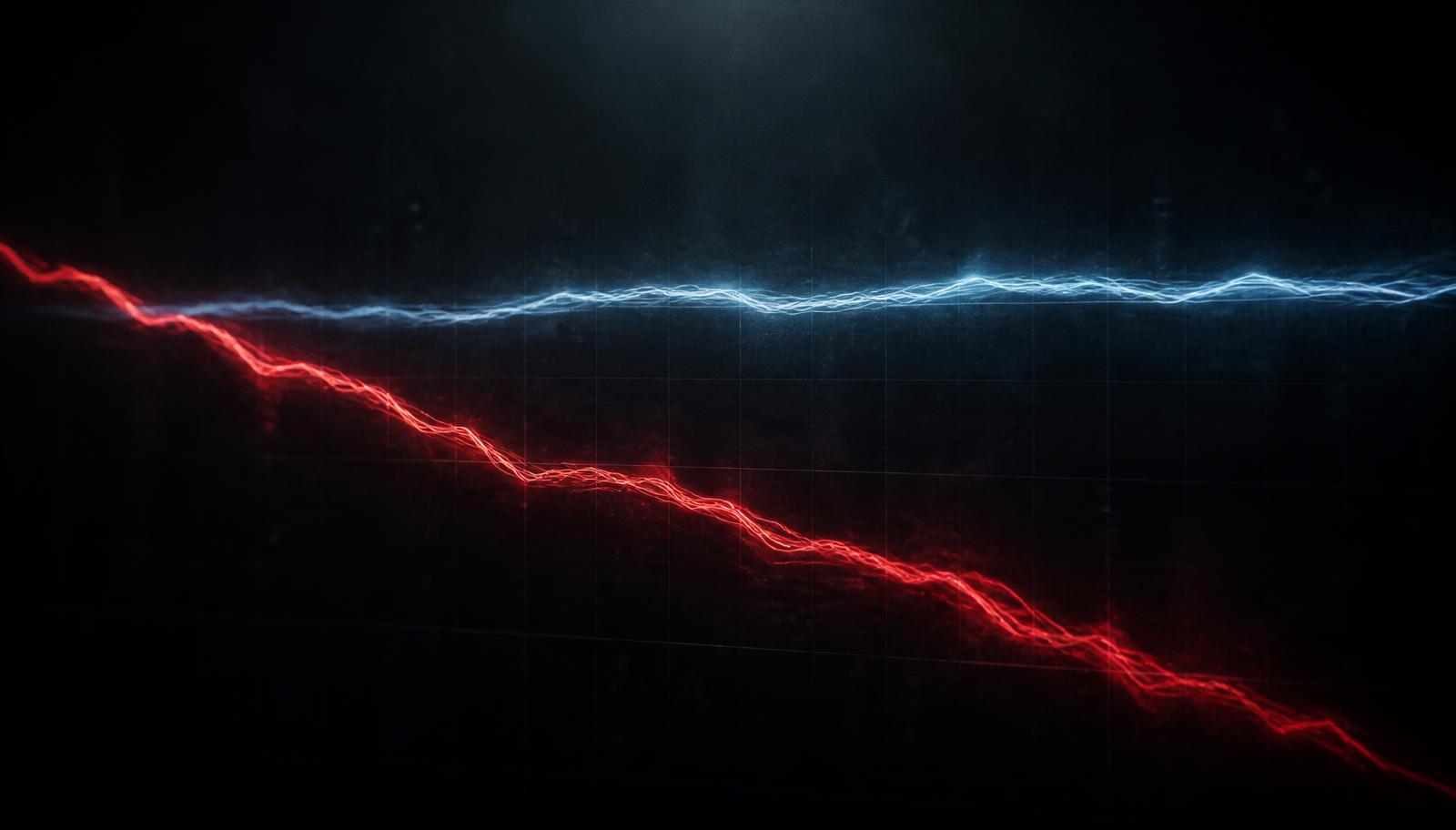
Picture two companies. Both sit at 4.2 stars. Both have a few thousand reviews. On paper, they look like the same business having roughly the same relationship with its customers.
They are not the same business.
One of them has always looked like this — a steady mix of praise and minor gripes, the ordinary noise of running a company that serves real people. The other used to sit closer to 4.6, and has spent the last three months sliding down, one cancellation-flavored review at a time. The average can't tell you which one you're looking at. It just averages.
This is the quiet problem with star ratings: they collapse time into a single number. A rating is a photograph of everything that has ever happened, flattened into one figure — it has no memory of direction, no sense of momentum, no idea whether things are getting better or quietly falling apart. Two companies can arrive at the exact same average from opposite directions, and from the outside, they're indistinguishable.
We built CustomerEye because the direction is usually the more interesting story.
Underneath the score every company gets, we're not just counting stars. We're looking at how sentiment has moved over time — not just whether recent reviews are positive or negative, but whether they're more or less positive than the reviews before them. We're reading for specific language that tends to show up right before someone leaves — the word "switching," the word "cancelled," the particular tone of someone explaining, patiently, exactly why they're done. None of that shows up in an average. All of it shows up in a trend.
Put together, this becomes something we call a Churn Signal Score — not a prediction pulled from a black box, but a plain, explainable read on how much risk is sitting underneath a company's current reputation. Low, medium, or high, with the actual reasoning shown alongside it: this many reviews mention leaving, sentiment has moved this way over this period, here's the math. Nothing hidden, nothing that asks you to just trust the number.
The two hypothetical companies from the start of this post would look identical on a review aggregator's homepage. They would not look identical here. One would read as stable — the same steady hum it's always had. The other would read as a company that's currently in the process of losing people, with the specific evidence for why, right there to check for yourself.
That gap — between what a rating shows and what's actually happening — is where we think the real value of customer feedback lives. Not in the number itself, but in what the number is quietly refusing to tell you.
If you're curious what your own trend looks like, or a competitor's, you can look it up on CustomerEye — every company we've analyzed gets this breakdown automatically, for free, no setup required.
See your own trend
Look up any analyzed company and check the direction behind the rating.
Explore companies